


The Imperial German Army in World War I was the largest armed force in Germany. The German Army was a highly organized and complexly structured armed force made up of various types of troops and units. At the beginning of the war, the army was strongly influenced by the traditions of the 19th century, with its organization and structure based on the experiences of the Unification Wars and the Prussian military system.
The recruitment and training of officers in the German army was a strictly structured and elitist process that was closely intertwined with the social hierarchy and political structures of the empire. The Prussian-influenced army was regarded as one of the central institutions of the empire and placed high demands on its officers. The officer's career was closely linked to the social elite. It was primarily open to men from the nobility and the upper middle classes. Particularly in Prussia, which played the dominant role in the German army, the officer corps was a bastion of the nobility. Between 60 and 70 percent of the officers in the Prussian army came from noble families.[23][24]
Around a third of the officers came from the cadet corps, who left the "Oberskunda" at the age of 17 and took the ‘Fähnrich’ exam after seven months of service to be accepted into the "Kriegsschule". Around two-thirds of officers came from the ranks of the Fahnenjunker. To be accepted into a regiment under this status, certain requirements had to be met in terms of age (17 to 21 years), physical aptitude, education, income and general fitness. Upon presentation of certificates confirming that these conditions had been met, the corps commander announced the applicant's acceptance as a Fahnenjunker at the first available post after he had served 6 or 8 months as a private or ensign in the troops. Some reserve officers, who were specially authorised by the Emperor and had certain qualifications, were allowed to take the officer's examination after a longer period of training in a regiment, but without going through a war college, and received their commission after a positive vote from the officers of their regiment.
UNITED BRICKS PRINTED FIGURES
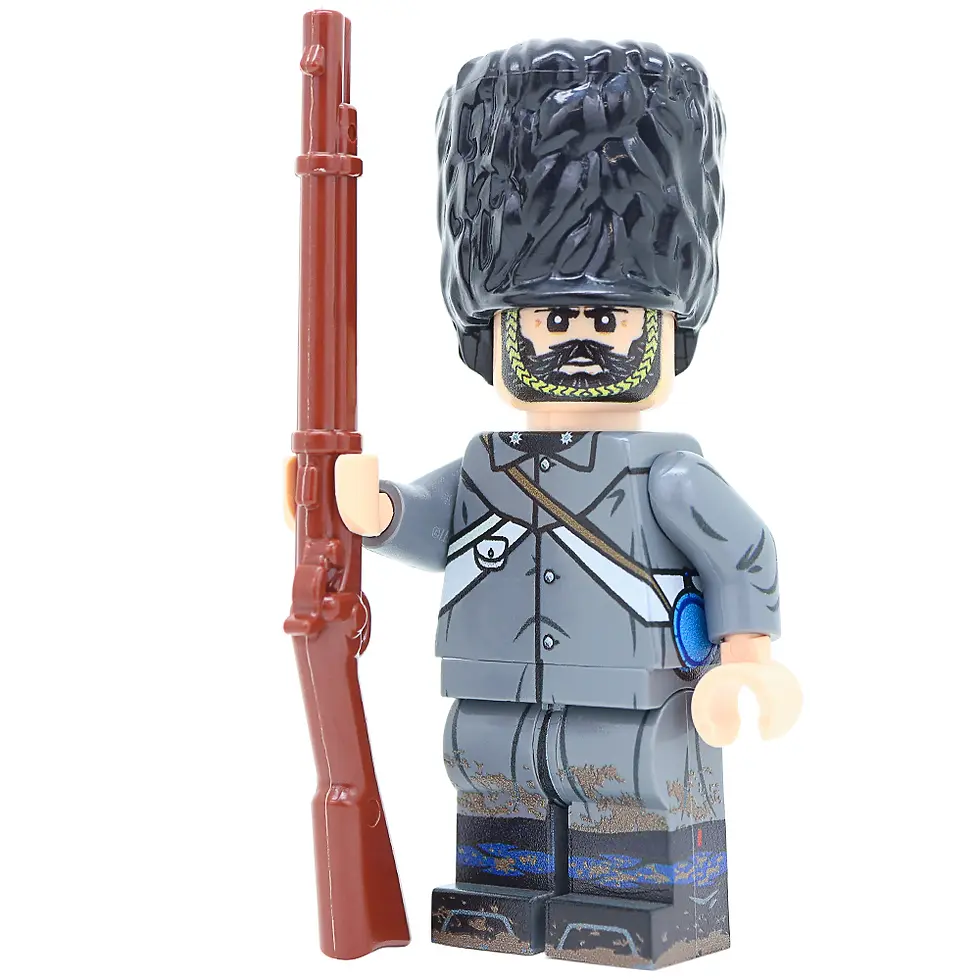
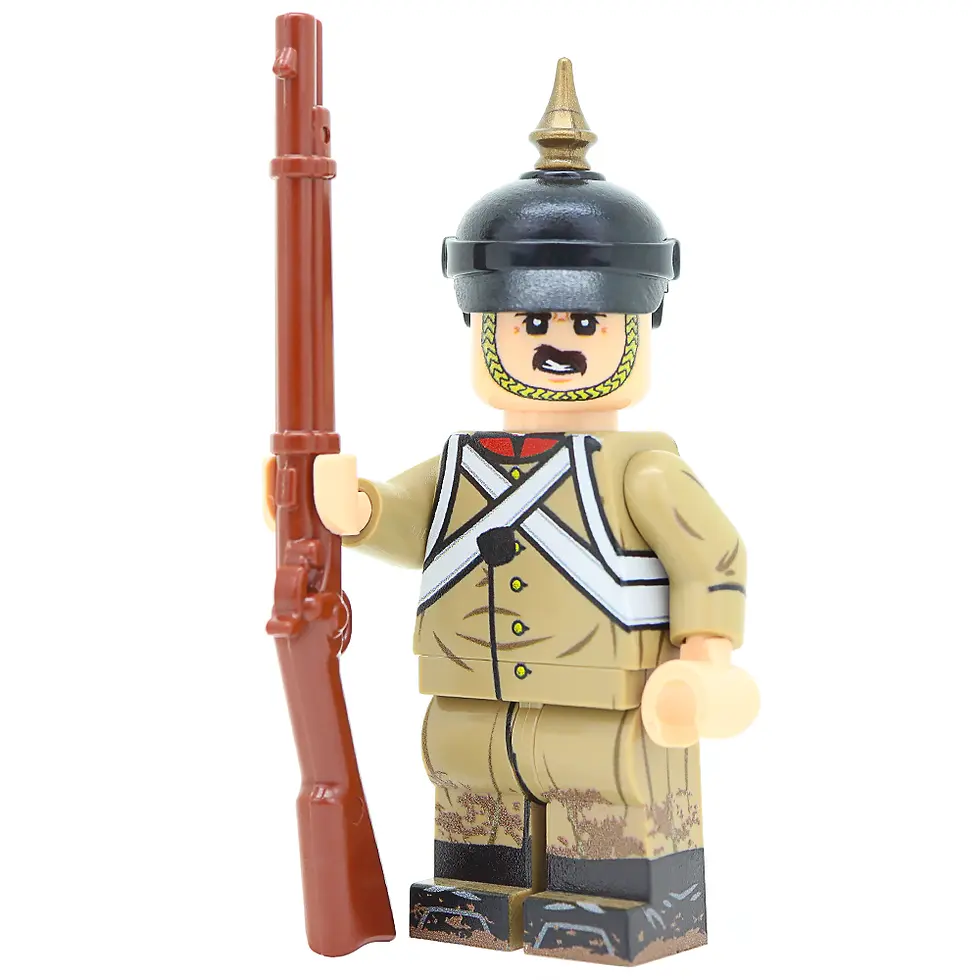
United Bricks custom printed collectable minifigures are printed on genuine brand new LEGO parts using a high quality UV printing method. They make the perfect gift or addition to a collection, and are a great way to learn history through building and creating scenes.
This Minifigure features a fully printed 360 torso, legs, along with a printed head.








+Minifigure)
Reviews
Just like the infantrymen, there's nothing more to say about this exceptional product. Buy it, take advantage of its availability, and share the story with your loved ones or for yourself. Thank you, United Bricks.
Great detail and just the Minifigure I need for My WW1 Moc
way better than brickmania and also so much cheaper big props to united bricks